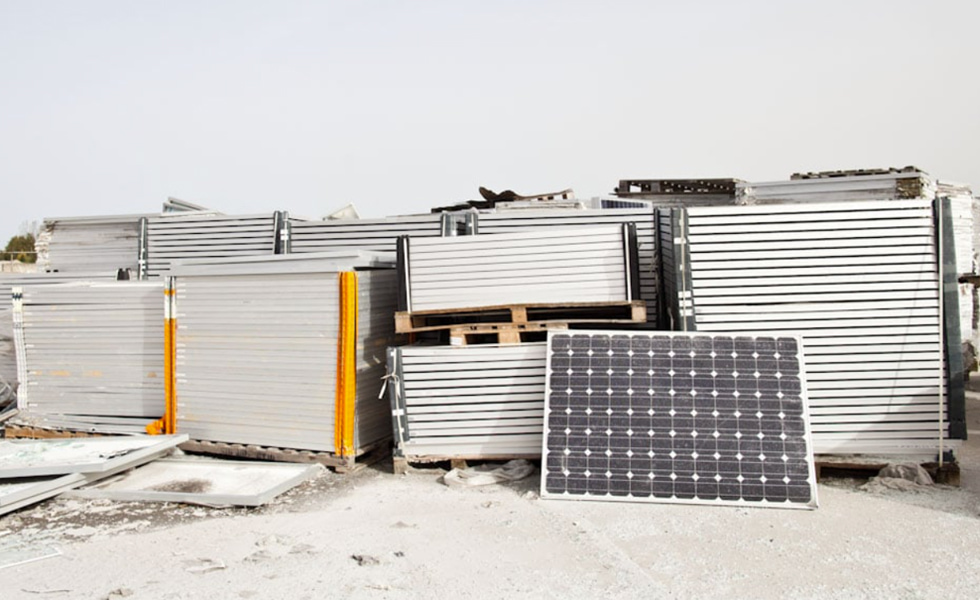
A new study indicates that Europe's photovoltaic (PV) recycling capacity will lag behind projected waste volumes in the coming decades.
The study, conducted by the University of Murcia and the EU Joint Research Centre, reveals a growing mismatch between projected PV waste flows and existing recycling infrastructure between 2030 and 2050.
The study estimates that while the EU currently has a recycling capacity of approximately 170,000 tons per year, PV waste is projected to reach 2.2 million tons per year by 2050, resulting in a "significant capacity gap."
Researchers point out that despite EU member states' commitment to massively expanding PV capacity as part of decarbonization efforts, the EU's PV end-of-life regulatory framework is "incomplete and fragmented."
The study states that given the significant increase in PV installations expected in the EU from now until 2050, and the fact that some countries have already achieved their early PV deployment targets ahead of schedule, the need to fill regulatory gaps is "extremely urgent."
Germany, France, Spain, and Italy are projected to be the largest contributors to this growing waste. For example, Germany alone could generate nearly 681,800 tons of photovoltaic waste annually by 2050—far exceeding its current recycling capacity of 99,000 tons per year. Similar capacity gaps exist in other major markets, with Italy, Spain, and France also facing severe shortages.
The study notes, "These trends indicate that waste from end-of-life products may materialize earlier than expected, further highlighting the urgency of expanding recycling infrastructure and aligning regulatory frameworks with actual market growth." "
Regulatory and Logistics Gaps
Although photovoltaic modules have been included in the EU Waste Electrical and Electronic Equipment Directive (WEEE) since 2012, research shows that implementation varies across member states. Many countries lack dedicated logistics for photovoltaic waste, robust enforcement mechanisms, and accurate tracking systems. This regulatory inconsistency hinders effective recycling, with stakeholders citing the lack of a unified Extended Producer Responsibility (EPR) fee structure and minimum recycling standards as major obstacles.
Logistical challenges further exacerbate this problem. The geographical concentration of recycling facilities in a few member states leads to high transportation costs and service gaps in underserved areas. Furthermore, the lack of standardized dismantling technologies and digital tracking tools also limits the viability of recycling operations." Scalability.
Strengthening Solar Energy Recycling Infrastructure
To address these challenges, the study proposes a series of targeted recommendations aimed at aligning infrastructure, regulation, and market incentives with circular economy objectives.
Key measures include strengthening Extended Producer Responsibility (EPR) under the revised Waste Electrical and Electronic Equipment Directive (WEEE), introducing clearer obligations for photovoltaic-specific waste logistics, standardizing EPR cost structures, and mandating reporting procedures to improve traceability and enforcement.
It also recommends introducing minimum recyclability standards in the form of a "recyclability index," assessing indicators such as ease of dismantling, material recyclability, and eco-design characteristics to promote upstream product innovation and reduce downstream costs.
The study also points to the Horizon Europe program... EU funding tools such as the Recovery and Resilience Facility (RRF) and the European Union's Recovery and Resilience Fund should prioritize investments in advanced, regionally distributed recycling centers. These centers are particularly important for countries with increasing waste volumes but limited processing capacity.
Other proposed measures include mandating digital traceability for all new solar panels using digital product passports and streamlining cross-border transport processes to facilitate the flow of waste across borders.
Learning from Global Practices
The study also draws lessons from international experience. China's coordinated national R&D programs and early emphasis on standardization provide a model for the harmonization of policy, technology, and industry scale. Meanwhile, the US, despite lacking federal mandates, demonstrates significant potential through its private sector innovation and regionally distributed recycling networks. Australia shows that regulatory measures such as banning landfilling can stimulate industry action.
The study concludes that Europe's solar recycling infrastructure is at a critical juncture, with a significant gap between policy objectives and actual operations.
The report states: "Without decisive action, the EU faces risks such as out-of-control photovoltaic waste management, loss of critical materials, and missed strategic autonomy." "By mid-2025, solar power will account for a record share of Europe's electricity supply. This study's findings suggest that achieving a sustainable terawatt-scale photovoltaic future depends not only on the successful deployment of new solar installations but also on the consistency of downstream recycling infrastructure and policies."