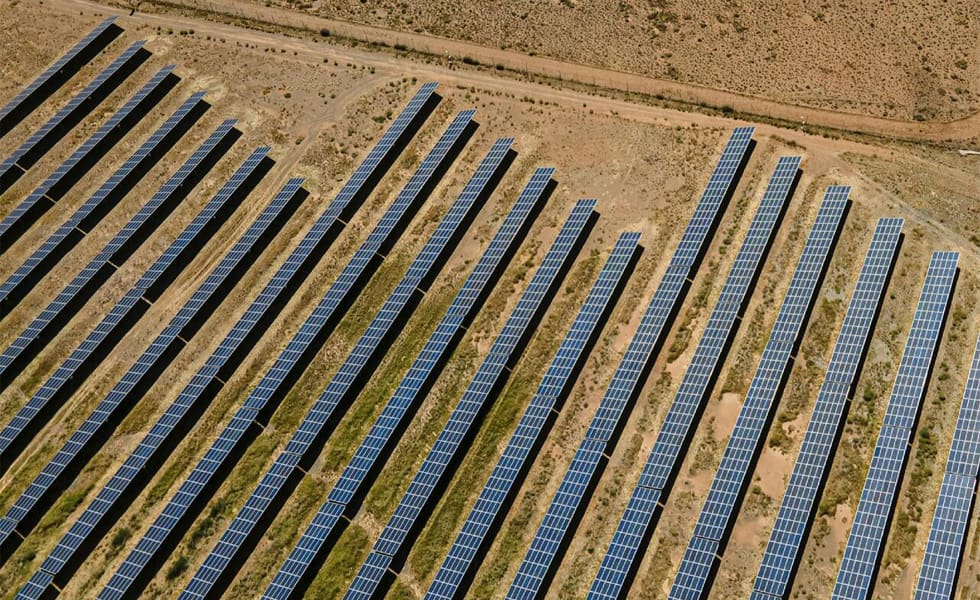
Without a press conference or official announcement, a significant ban was quietly implemented during a video conference in Brussels, the EU capital.
According to the German magazine Der Spiegel, on April 23, the European Commission, in a closed-door manner, directly halted subsidies for Chinese-made solar and battery inverters—effective immediately.
The report states that the meeting was chaired by Barbara Gwovack, head of the Economic and Security Department at the European Commission Secretary-General's office. At the meeting, the Commission informed several of its directorates-general and relevant industry associations of the funding ban: any energy project using inverters from four so-called "high-risk countries"—China, Russia, Iran, and North Korea—would be excluded from EU funding. Furthermore, inverters from third-party companies "owned or controlled by Chinese entities" were also excluded from subsidies.
Sources familiar with the matter revealed that because this decision involves sensitive economic and security issues, the meeting explicitly requested that it be handled discreetly and "not publicized."
This secret directive covers almost all major EU financing channels: the European Investment Bank, the European Investment Fund, and even extends to neighboring regions connected to the European grid, such as North Africa and the Balkans. The European Investment Bank alone financed approximately one-fifth of the EU's solar projects by 2025, most of which used Chinese-made inverters.
Of particular note is the timeline for this directive's implementation: new projects take effect immediately, with no grace period. Financial institutions must report their ongoing projects by early May and are "urged" to replace as many installed inverters as possible. It's quite urgent.
If this directive is strictly enforced, it will virtually sever the funding lifeline for Chinese inverters in Europe.
I. Not a Sudden Decision
Looking at the timeline, it becomes clear that the EU's ban was not a spur-of-the-moment decision, but rather a continuation of a series of policy actions in recent years.
In April 2024, the EU launched an investigation into the Chinese company Tongfang Weishi under the Foreign Subsidies Regulation. In 2025, the EU released the Net Zero Industrial Act, a secondary legislation encouraging member states to increase the proportion of domestically manufactured new energy equipment. Later that year, an internal document titled "Economic Security Doctrine" listed "dependence on Chinese solar inverters" as a risk point requiring attention.
Entering 2026, the pace of policy implementation accelerated significantly. In January, the EU proposed a draft amendment to the Cybersecurity Act, aiming to establish a list of high-risk suppliers in 18 key areas. In February, more than 30 members of the European Parliament jointly wrote to the European Commission, requesting that inverters manufactured by Chinese companies such as Huawei and ZTE be listed as high-risk products, and proposing a target of removing installed equipment within 36 months. In March, the European Commission released a draft Industrial Accelerator Act, proposing that photovoltaic projects receiving public funding should prioritize the use of EU-made inverters. According to the South China Morning Post, European Commission President Ursula von der Leyen approved the funding ban at a high-level meeting in March 2026. That same month, German Chancellor André Merz visited China at the invitation of the EU, expressing a willingness to strengthen communication and coordination between the two countries. This coincidence reflects the EU's complex mindset of "engagement and prevention" in handling its trade relations with China.
These actions indicate that the EU's review of the inverter supply chain has been in the works for some time. This funding ban is a concrete implementation of its "risk mitigation" strategy in the renewable energy sector.
So, why inverters specifically?
While inverters may appear as inconspicuous boxes, they are crucial control devices for solar power systems and energy storage batteries, responsible for regulating when and how much electricity is delivered to the public grid. Since almost all inverters require internet access for software updates and remote control, the European Commission believes these devices pose a security risk of cyberattacks.
Industry organizations point out that if inverter firmware or software updates are maliciously manipulated, theoretically, a large number of devices could be affected simultaneously, thus disrupting the stable operation of the power system.
An EU official has publicly expressed this anxiety: "When Chinese companies hold the digital keys to the European power grid, our energy sovereignty is gone."
It's worth noting that Europe's dependence on Chinese inverters is indeed very high. Statistics show that Chinese brands hold over 80% of the European market share, and over 220 gigawatts of solar power capacity uses inverters manufactured by Chinese companies. In 2025, China's total photovoltaic inverter exports reached approximately US$9.022 billion, with Europe being the largest market; in the first quarter of 2026, exports to Europe reached RMB 6.5 billion, a year-on-year increase of 53%.
Such high market concentration, coupled with the inverter's special status as a "grid interface," naturally fuels EU policymakers' anxieties about supply chain security.
However, objectively speaking, there is currently no publicly available evidence that Chinese-made inverters have caused any actual cybersecurity incidents in Europe. But policymakers tend to adhere to the "prevention principle"—preferring to act first rather than wait for risks to escalate into incidents. This thinking is not uncommon in the trade and economic sphere.
II. Which Chinese companies will be affected?
Next, let's look at the supply chain: Which Chinese companies will be affected? Huawei is one of the leading players in the global inverter market. In the European hybrid inverter sector, its market share continued to increase in the second half of 2025. However, due to its outstanding brand and technological strength, it has also been a focus of Western security scrutiny.
Sungrow Power Supply Co., Ltd. is ranked alongside Huawei as a global inverter giant, with deep expertise in commercial and industrial energy storage and large-scale ground-mounted power plants.
Deye Power Supply Co., Ltd., formerly the number one in the European hybrid inverter market, slipped to second place in 2025, with Huawei taking the top spot. According to its annual report, its inverter business revenue reached 6.322 billion yuan in 2025, with sales of 771,500 energy storage inverters; its energy storage battery pack business grew by 56.34% year-on-year. The company maintained good momentum in the first quarter of 2026.
GoodWe ranks among the top hybrid inverter manufacturers in the European market and is expected to return to profitability in 2025. Smaller manufacturers like Airo Energy are also heavily reliant on the European market and are more sensitive to policy changes.
Overall, approximately 78% of inverters imported by the EU in 2023 came from China, and 9 out of the 12 major suppliers in the European market are Chinese companies. This means the impact of this funding ban is quite broad.
However, the attitudes and implementation capabilities within the EU are not unified – leaving room for uncertainty regarding policy direction.
During his visit to China in February 2026, German Chancellor Merz stated his willingness to strengthen communication and coordination with China and jointly advocate multilateralism and free trade.
Spanish Prime Minister Sánchez has visited China four times in four years, actively seeking to expand economic and trade cooperation with China, viewing himself as a "bridge" between China and the EU.
Meanwhile, Belgian Prime Minister De Wever wrote to the European Commission in March 2026, expressing concerns about the impact of Chinese imports on the European economy and calling for a tougher policy.
Countries like Lithuania and the Czech Republic, which previously held a relatively hardline stance towards China, have shown signs of policy adjustments following changes in government.
Meanwhile, the challenges at the implementation level are more tangible. On one hand, European domestic inverter production capacity is far from meeting demand. While European inverter manufacturing capacity exceeded 80GW in 2023, it accounted for only 21% of global production. On the other hand, SMA Solar, Germany's leading photovoltaic inverter manufacturer, saw its net loss widen by 196.1% year-on-year in the first half of 2025, reflecting the operational pressure faced by European companies.
This means that completely cutting off the Chinese supply chain could potentially drive up the cost of European photovoltaic projects in the short term, thereby impacting its energy transition process.
Perhaps considering these practical constraints, the European Commission included exceptions to the ban: exemptions can be applied for in cases of delays exceeding one year or other overwhelming political or security considerations. This flexibility allows for future policy adjustments.
Faced with the EU's tightening policies, Chinese inverter companies have also been taking action in recent years.
Some leading inverter manufacturers have begun shifting production capacity to Southeast Asia (such as Indonesia) and Mexico to circumvent EU geographical restrictions. Meanwhile, increasing investment in cybersecurity certification and obtaining third-party international certifications (such as TÜV) has become an industry consensus—addressing security concerns from a technological perspective is a more pragmatic choice than confrontation.
It is worth noting that data from the first quarter of 2026 shows significant growth in Chinese inverter exports to emerging markets such as Australia (up 198% year-on-year), Africa (+65%), and the Middle East. Companies are building a more diversified market structure, rather than putting all their eggs in one basket.
Looking back, the EU's secret halt to subsidies for Chinese-made inverters reflects the difficult trade-off the EU faces between energy transition and supply chain security, and also marks a phased shift in Sino-EU economic and trade relations from "cooperation first" to "rules and security in tandem."
In the short term, this ban will impact the European business of Chinese inverter companies, especially projects reliant on EU funding. However, insufficient European production capacity, differing opinions among member states, and the real pressures of energy transition—all of these factors could compromise policy implementation.
In the long run, China and Europe share common interests in climate and clean energy. Can supply chain anxieties and trade frictions be gradually resolved through technological dialogue, market diversification, and pragmatic cooperation, without escalating conflict? This is an unavoidable issue for both sides.