The safety of solar power systems has once again become a focal point of public attention.
Just recently, a major fire broke out in the Springwood ward of Marden Hospital in North Yorkshire, England. When firefighters arrived, the entire building was engulfed in flames. Fortunately, all 15 patients were safely evacuated without injury. Subsequent investigations suggest that rooftop solar panels were highly likely one of the causes of the fire.
Notably, just days after this fire, Suffolk, England, issued an emergency notice temporarily shutting down the rooftop solar systems of approximately 80 schools in the area for a comprehensive safety inspection.
According to relevant information, three school fires related to solar power systems have occurred in the region in the past year, including the fire at Brantham Brooklands Primary School in March 2025 and the fire at East Burgholt Primary School in August of the same year.
The local government stated that it cannot yet determine whether the three fires were caused by a common equipment malfunction. However, public buildings house large numbers of people, including teachers, students, and patients, making safety the highest priority. Therefore, a conservative approach of "shutting down and inspecting first" has been adopted.
The UK's order to temporarily shut down solar panels at 80 schools is understandable, given the numerous reports of solar-powered fires in the UK over the past two years, primarily affecting densely populated building complexes.
Besides hospitals and schools, shopping malls and shopping centers have also been affected. In 2025, a fire broke out at an IKEA store in northwest London around 10:30 am on a Friday, forcing the evacuation of approximately 250 people. The fire was caused by solar panels catching fire.
According to previous reports, five fire engines from Royal Park, Wembley, Wilsdon, and North Kensington were dispatched to the scene. Fortunately, there were no reports of injuries.
Solar fires are not always caused by the panels themselves.
Whenever news of solar power plant fires breaks out, the public's first reaction is often that "the panels are of poor quality." However, the reality is far more complex.
As with the recent fire on the roof of a UK hospital, investigators determined that the rooftop solar panels were likely one of the contributing factors, but it doesn't necessarily mean the panels themselves were the source of the fire. It could be due to improper installation methods or a lack of proper maintenance that created the problem. As is well known, the fire risk of photovoltaic (PV) modules stems, to some extent, from their inherent technical characteristics.
The causes of fires in distributed PV power stations can be broadly categorized into three types: hot spot effect, DC arcing, and quality issues. Among these, hot spots and DC arcing are considered the root causes of 80% of PV power station fires.
The hot spot effect, simply put, is a "disaster caused by a shadow." When the surface of a PV panel is blocked by bird droppings, mud, leaves, or severe dust accumulation, the blocked cells cannot generate electricity normally and instead act as a load, consuming energy generated by other cells, leading to a rapid increase in local temperature. If this localized high temperature continues to accumulate, it can accelerate module aging or, in severe cases, directly cause a fire.
An even more dangerous killer is DC arcing. The DC side voltage of a PV system is typically as high as 600 to 1000 volts. Due to loose connections, poor contact, broken wiring, or insulation failure, DC arcing is easily generated. Sustained arc temperatures can reach 3000 to 7000°C, enough to instantly carbonize surrounding components. A photovoltaic (PV) power plant has hundreds or even thousands of connectors; a single loose connection can become a source of fire.
If hot spots and arcing are "risks during operation," then insulation failure is a "hidden danger when stationary." Ji Zhenshuang, an expert from the China Photovoltaic Industry Association, pointed out in analyzing the phenomenon of "module spontaneous combustion" that even when the power plant is not in operation or is shut down, a cracked module panel or damaged cable insulation can still lead to a partial short circuit in the electrical circuit, causing an unexpected release of energy and thus spontaneous combustion.
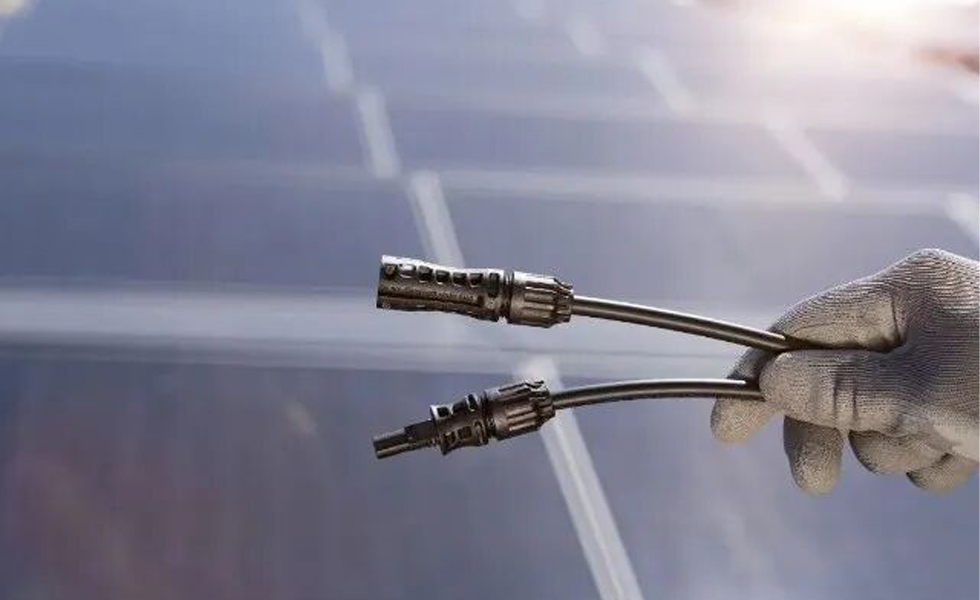
Furthermore, connectors in a PV power plant are another seriously underestimated risk factor. A 1MW PV power plant uses approximately 1700-2000 sets of connectors. When the contact resistance increases abnormally, the temperature rise generated by the current will exceed the tolerance limits of the plastic casing and metal parts, leading to melting or burning.
According to fire data from multiple countries and related research results, excluding unidentifiable or unrelated ignition points (33%), fires caused by PV connectors account for the highest proportion, reaching 17%, exceeding those caused by PV modules and inverters.
In response, British energy expert Tony Slade stated bluntly: "Solar panels themselves are primarily made of glass and are unlikely to catch fire. Photovoltaic fires are more likely caused by incorrect specifications or damaged wiring, as well as problems with the conversion equipment." He added: "This is not a problem with renewable energy, but rather a problem with the specifications, installation, and maintenance of the electrical system."
Safety Concerns Amidst the Module Price War!
If improper installation and lack of maintenance are the "direct causes" of photovoltaic fires, then vicious price competition is a "deep-water bomb" that sows the seeds of future problems.
In July of this year, photovoltaic module prices once again broke through the psychological barrier of 0.7 yuan/W. Zhejiang Energy's lowest bid for its 2.52GW module procurement was 0.685 yuan/W; China National Nuclear Corporation's 4.3GW procurement bids ranged from 0.66 to 0.765 yuan/W; and in China Resources Power's 5.4GW procurement, about half of the bidders offered prices below 0.7 yuan/W.
It is worth noting that even leading module manufacturers have been fully engaged in the price war. Spot inventory prices in some distribution channels have even fallen to the 0.6 yuan/W range.
This price is significantly lower than the total cost of photovoltaic modules, and many major module manufacturers' gross profit margins for their module businesses are projected to be negative in 2025.
When the entire industry is caught in a cycle of "the more they produce, the more they lose," and when 18 out of 26 listed photovoltaic companies are deeply mired in losses, with a combined loss estimated at 12.1 billion to 15.3 billion yuan, companies will inevitably resort to extreme cost-cutting to survive.
This cost-cutting will ultimately impact the product quality of photovoltaic modules.
According to data from the National Solar Photovoltaic Product Quality Inspection and Testing Center, in 2025, 11 out of 69 batches of modules from 36 companies were found to have quality problems during a random inspection, with a failure rate approaching 16%. A 2025 random inspection by the State Administration for Market Regulation showed that 9 out of 70 batches of crystalline silicon photovoltaic modules were substandard, with 7 batches failing the mechanical load test for safety.
What are the consequences of substandard products? Failure to meet mechanical load standards means that the modules may crack or detach in strong winds, snow, or other adverse conditions; substandard electrical safety means poor insulation and inadequate grounding, which can easily lead to electric shock and fire.