Those in the energy storage industry likely share the same feeling: kW (kilowatts) and kWh (kilowatt-hours), these two fundamental units seem simple enough to be overlooked, but whether you're a newcomer or a seasoned veteran, you'll occasionally confuse them. Most people can memorize the terms, but don't understand what they represent in actual projects, what the differences are, or how they affe...
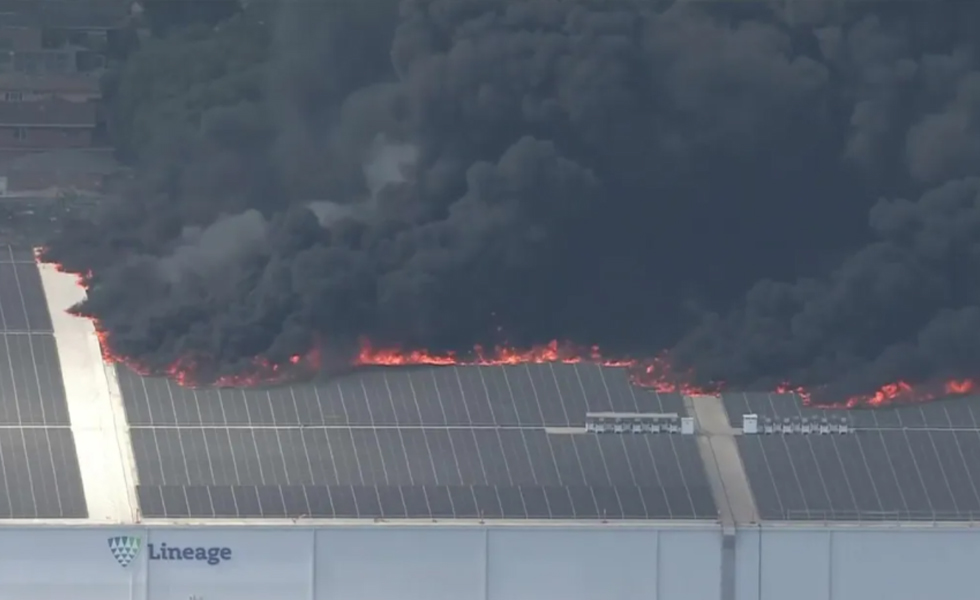
In just half a month, three major fires have engulfed rooftops in three different countries. Recently, three seemingly unrelated fires—one in a domestic chemical plant, one in a cold chain warehouse across the ocean, and one in a European residential building—all pointed to rooftop photovoltaic (PV) modules. With summer approaching, a peak fire season, rooftop PV fires are evolving fro...
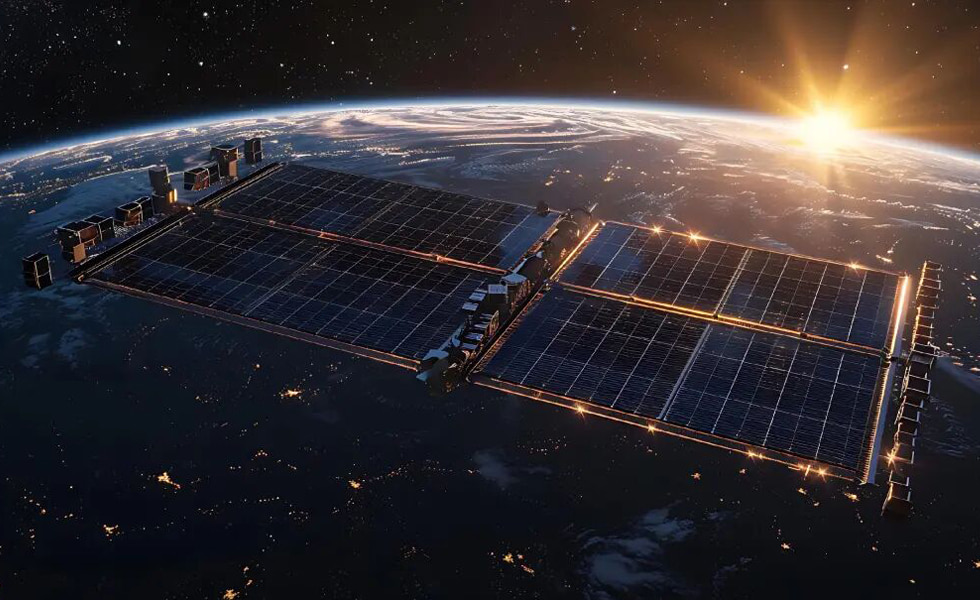
SpaceX's space photovoltaic story is facing a new test. On July 17th, Beijing time, SpaceX's 13th Starship test flight was aborted at ignition due to an malfunction in four engines. The giant rocket remained motionless on the launch pad. Following the news, the stock price fell by more than 3% in after-hours trading. From the overwhelming enthusiasm on its first day of trading to a month later, th...
For a long time, the mention of deserts, Gobi, and wastelands conjured images of sandstorms, unsuitability for development, and even ecological governance challenges. Now, these barren lands are becoming a crucial battleground for China's new energy development. The plan proposes prioritizing the construction of wind and solar power bases in the "Three Norths" region (Northwest, North, and Northwe...
Just recently, aviation history witnessed another bombshell. On August 12th, at Plattsburgh International Airport in New York State, the X1, the world's largest all-battery electric demonstrator, completed its maiden manned test flight. The entire test flight lasted 27 minutes, with the all-electric propulsion system outputting over 1 megawatt, achieving zero consumption of aviation kerosene throu...
By 2026, large-format 210mm silicon wafers and ultra-high-power modules (exceeding 640W) have become the dominant market standard. Yet, the drive for ever-higher power output has exacerbated a hidden technical conflict: the high currents associated with large-format cells lead to excessive current loads and surging internal resistance losses, placing greater engineering demands on cell-cutting str...
Night has just fallen over a county town in the south, yet the convenience store by the roadside remains open. Standing at the checkout counter, the owner opens the month's electricity bill, his brow furrowing even deeper. Refrigeration units run all night, the air conditioner stays on from opening to closing, and the cash register and surveillance system must remain powered without interruption. ...
The Dutch National Cyber Security Centre (NCSC-NL) and cybersecurity firm Modat have confirmed that nearly 8,000 physical and virtual photovoltaic (PV) power assets across Europe are publicly accessible via the internet, exposing a wide range of entities—from individual operators to national-level organizations—to significant cybersecurity risks. Modat’s Soufian El Yadmani and ...
Photovoltaic (PV) safety—a sudden, urgent wake-up call. 8,547 Wind and Solar Systems Left "Exposed" A report jointly released by the Dutch internet intelligence firm Modat and the National Cyber Security Centre of the Netherlands (NCSC-NL) reveals that across 40 countries—including EU member states, EFTA nations, and EU candidate countries—there are 8,547 systems linked ...