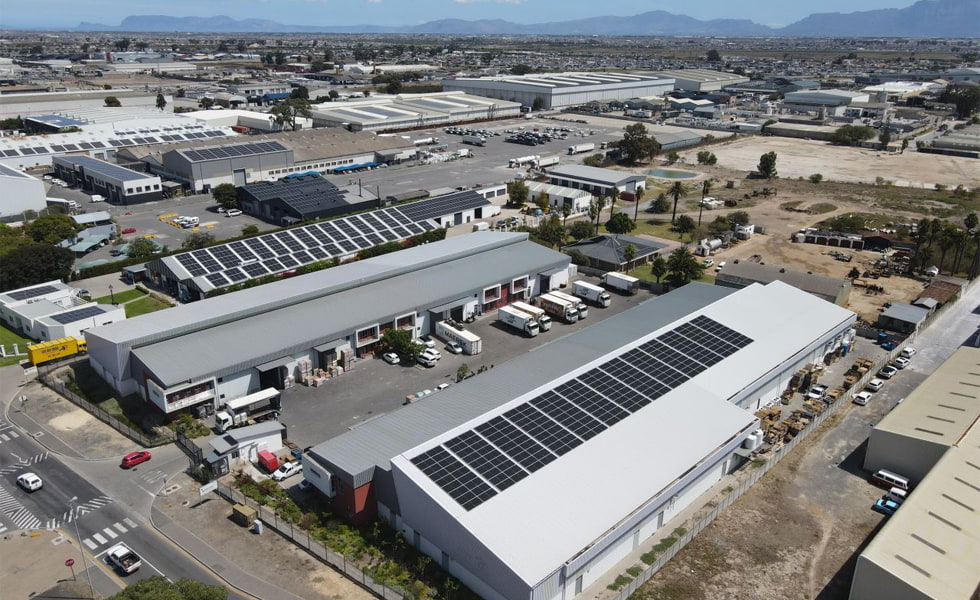
According to a report by energy think tank Ember, the Philippines has become the second-largest market for Chinese photovoltaic (PV) module exports, which are expected to drive significant growth in its rooftop PV market.
China's PV module exports to the Philippines reached a new record in 2026. To date, 4.133 GW of Chinese PV modules have arrived at Philippine ports. More than 2 GW of Chinese modules were shipped in March 2026 alone, by 471 MW in January, 729 MW in February, and 1 GW in April.
So far this year, the only country importing more PV products from China is the Netherlands, which serves as a transit hub for much of Northern and Western Europe via the Port of Rotterdam.
Ember states that the Philippines has surpassed Pakistan, Brazil, Spain, and France to become a major destination for Chinese PV products.
The record-breaking import levels in 2026 follow a sustained increase in imports from 2025; according to UN data analyzed by Ember, the country's net imports of solar panels will rise from $365 million in 2024 to $483 million in 2025, corresponding to 3,130 MW and 5,068 MW of solar products respectively (accounting for declining solar module prices).
Ember stated that the surge in imports foreshadows a "significant acceleration" in the Philippine rooftop solar market.
In recent years, imports of solar modules have far exceeded the installed capacity of large-scale ground-mounted solar power plants—in 2025, imports will be more than five times the installed capacity of large-scale ground-mounted solar power plants reported by the Department of Energy (DOE). Only a small fraction of the modules shipped to the Philippines were later diverted to other countries.
Ember stated that such a large inventory "likely" signifies a significant expansion in rooftop solar. While the DOE does not track residential or other rooftop solar installations, the think tank, after analyzing satellite imagery, power generation and prices, and module import levels, predicts significant growth in the Philippine rooftop solar market, and that this growth may have already begun. Tracking Rooftop Solar Installations
Satellite data from the Climate and Sustainable Cities Institute shows that the Philippines had 721 MW of rooftop solar PV capacity by early 2025. Ember stated that this is largely irrelevant to the past 12 months. However, by analyzing power market operator generation data, the institute estimates that approximately 600 MW of unreported rooftop solar PV capacity has been added since April 2025.
The report notes, "A significant year-on-year decrease in midday grid generation, which is peak solar power generation time, strongly suggests that rooftop solar is growing." The Philippines also boasts some of the highest electricity prices in Southeast Asia, naturally incentivizing rooftop solar installations.
Meralco, the Philippines' largest power company, has "significantly" increased retail electricity prices over the past 12 months—up 17% for retail customers, 18% for commercial customers, and 14% for industrial customers since May 2025. Ember stated that this has shortened the payback period for solar PV installations in the Philippines: nearly a year for residential and industrial users, and more than six months for the commercial system.
"Rooftop solar is more economically viable than ever, and its rapid rise is inevitable," said Dave Jones, chief analyst at Ember. "The government has an opportunity to forge its own path in rooftop solar, pulling the Philippines away from fossil fuel dependence and onto a path of cheap, abundant electricity." Given the global energy crisis triggered by the Strait of Hormuz, Ember expects rooftop solar to be seen as a crucial tool for addressing rising prices and energy insecurity. The Philippine government has declared an energy emergency and plans to accelerate 1.4 GW of renewable energy projects due to the impact of the war with Iran.
Ember stated that direct support for rooftop solar is "the missing link that can help the Philippines emerge from the energy emergency faster and better." The agency believes that adding 3,500 MW of rooftop solar capacity within 24 months is "entirely achievable."